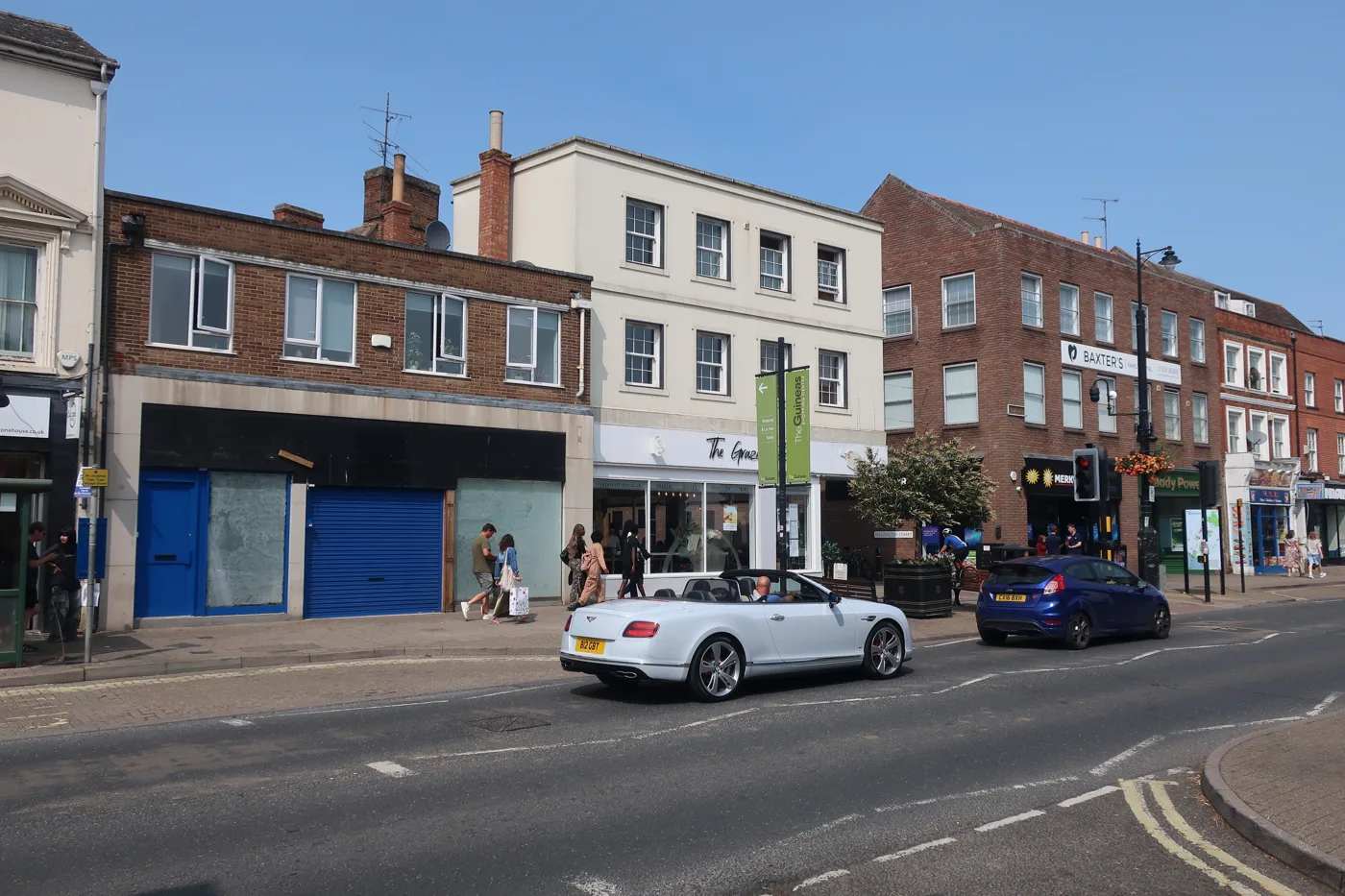

The Grenadier Guards paraded from Newmarket's clock tower to Tattersalls on 12 September. The town council's unanimous vote to confer it came in October 2025.
The Grenadier Guards were granted the Freedom of Newmarket on Saturday 12 September, marching from the town’s clock tower to Tattersalls, accompanied by the Band of the Grenadier Guards. Newmarket is about 13 miles west of Bury St Edmunds, in the same West Suffolk district.
Suffolk County Council, whose leader was among the guests, describes a freedom award as “one of the highest civic honours that a British local authority can bestow on a military unit” and says the regiment marched through the town centre “with colours flying and bayonets fixed” (Suffolk County Council, 13 September 2026).
What almost nobody has reported is when the town actually decided to do it, and what the decision looked like on paper. It was taken ten and a half months earlier, at a meeting called for that one purpose.
The vote: one item, one meeting, October 2025
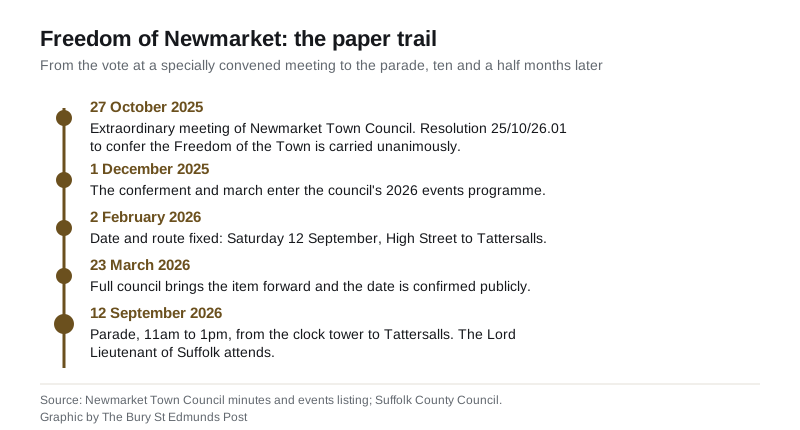
Newmarket Town Council held an extraordinary meeting on Monday 27 October 2025. The published, signed minutes record a single substantive item, numbered 25/10/25:
To approve a proposal to confer the Freedom of the Town on the Grenadier Guards Regiment
The proposal was made by Councillor Winter and seconded by Councillor Drummond. The minutes record that “a vote was taken which was unanimous”, and the resolution, 25/10/26.01, reads:
That the proposal to confer the Freedom of the Town on the Suffolk Grenadier Guards Regiment and to arrange and facilitate a marching event in September 2026 be approved.
Four councillors sent apologies. The meeting lasted until 7.26pm (Newmarket Town Council, minutes of the extraordinary meeting of 27 October 2025).
Councillor Philippa Winter, who moved the proposal, was re-elected Town Mayor on 26 May 2026 and was the person who invited the county council to the parade (annual meeting minutes, 26 May 2026).
Why it had to be a special meeting
Honorary freedom is one of the few things a town council cannot simply add to a routine agenda. Section 249 of the Local Government Act 1972 gives parish and town councils the power to admit honorary freemen and freewomen, and subsection (8) sets two conditions on the resolution. It must be passed:
- “at a meeting of the relevant authority which is specially convened for the purpose and where notice of the object of the meeting has been given”
- “by not less than two-thirds of the members of the relevant authority who vote on it”
(Local Government Act 1972, section 249)
Town and parish councils were only brought inside that power on 12 January 2010, by section 29 of the Local Democracy, Economic Development and Construction Act 2009. Newmarket’s October 2025 meeting was convened for this one item, and the vote was unanimous rather than merely two thirds.
Ten months of committee minutes
The parade then worked its way through the council’s Leisure and Services Committee, one line at a time, in the annual events programme:
- 1 December 2025. The programme for 2026 lists “September, Grenadier Guards conferment of Freedom of the Town and march/concert” (minutes).
- 2 February 2026. The entry gains its date and its route: “Grenadier Guards, Saturday 12th September 2026, conferment of Freedom of the Town, High Street Parade to Tattersalls” (minutes).
- 23 March 2026. At full council, a member of the public turned up for the item and the council voted to bring it forward on the agenda. The Chair confirmed the date and said details would appear in the Newmarket Journal (minutes).
The council’s own events listing for the day gives the times as 11am to 1pm on Newmarket High Street (Newmarket Town Council events).
Who was there
The county council’s account names the guests: the Lord Lieutenant of Suffolk, Mark Pendlington; Councillor Michael Hadwen, the leader of Suffolk County Council; Councillor Louis Busuttil, the council’s chairman; and members of its Cabinet. The contingent was company strength, in full ceremonial uniform, and paraded from the Newmarket clock tower to Tattersalls.
Councillor Hadwen said the day was “a very special day for Newmarket and Suffolk” and thanked “the Mayor of Newmarket, Councillor Philippa Winter, for the kind invitation”. He added that “it was a real pleasure to see it parade through the home of British horse-racing”.
The other anniversary at Tattersalls
The same day carried a second Grenadier event in the same building. The regimental association’s own 2026 calendar lists, for 12 September, the “Suffolk Branch 100th Anniversary Lunch at Tattersalls, Newmarket” alongside “The Regiment granted the Freedom of Newmarket parade” (Grenadier Guards, forthcoming events in 2026). The Suffolk branch is a hundred years old this year.
The Newmarket connection, in the town’s own words
The link runs through one king. Newmarket Town Council’s page on the regiment says the Grenadier Guards “was raised by Charles II in 1656 when in exile on the Continent following his crushing defeat at the Battle of Worcester on 3rd September 1651”, and that 400 exiled Royalists joined it (Newmarket Town Council).
Ten years later the same king came back to Newmarket. The council’s town history, written for it by Newmarket Local History Society, records that Charles II “chose to build a new, larger Palace (number III) further along the High Street after he returned to the town in 1666”, and that the foundations of the modern racing town were laid during his reign. What survives of that palace is now part of the National Heritage Centre for Horseracing and Sporting Art (Newmarket town history).
So the regiment and the racing town were both made by the same man, a decade apart. That is the connection the freedom recognises.
What it means for you
- The route will be used again on Sunday 8 November. The council’s events programme books a Remembrance service at the War Memorial followed by a High Street parade to Tattersalls for a service, on the same stretch of road (Leisure and Services minutes, 1 June 2026). Expect the same town centre disruption, and check the council’s listings before driving in.
- The decisions are published before the events. Newmarket Town Council puts signed minutes and its calendar on its own website, which is where the 12 September date sat from February onwards. If you want to know what is coming to the High Street, that is the page to read, not the posters.
- A freedom resolution needs a meeting of its own. If your parish or town council ever proposes one, the law requires a specially convened meeting, advertised as being for that purpose, and a two-thirds majority of those voting.
- Newmarket is in West Suffolk district, the same council area as Bury St Edmunds, so the district services are shared. Ours are set out on bin collection days, council tax bands and planning applications.
Sources
- Newmarket Town Council, minutes of the extraordinary meeting, 27 October 2025
- Newmarket Town Council, full council minutes, 23 March 2026
- Newmarket Town Council, Leisure and Services Committee minutes, 2 February 2026
- Newmarket Town Council, event listing for 12 September 2026
- Suffolk County Council, Council present as Grenadier Guards receive Freedom of Newmarket, 13 September 2026
- Grenadier Guards, forthcoming Grenadier events in 2026
- Local Government Act 1972, section 249
Have your say